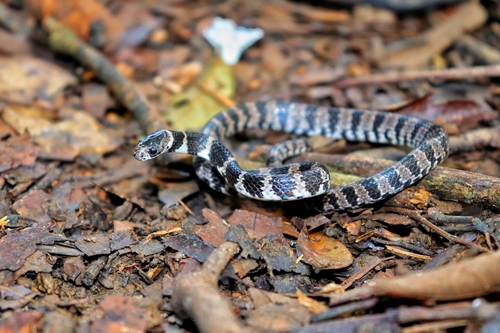
Brazilian Snail Eater
Dipsas mikanii
- Venom
- Not venomous
- Constrictor
- Non-constrictor
- Type
- Colubrid
- Family
- Colubridae
- Genus
- Dipsas
- Continents
- South America
- Countries
- 4
- How common
- Common
About
Brazilian Snail Eater (Dipsas mikanii) is a non-venomous colubrid of the family Colubridae, found in Argentina, Bolivia, Brazil, Paraguay. It lives in habitats such as tropical rainforest, tropical moist forest, tropical lowland forest, tropical dry forest and 26 more. Common: recorded in 281 places on iNaturalist.
Where it lives
Native range
Habitats
Estimated from where this snake is recorded and what kind of snake it is - not a confirmed habitat survey.
- Tropical Rainforest
- Tropical Moist Forest
- Tropical Lowland Forest
- Tropical Dry Forest
- Tropical Seasonal Forest
- Subtropical Forest
- Evergreen Forest
- Broadleaf Forest
- Coastal Forest
- Open Woodland
- Scrub Forest
- Thorn Forest
- Savanna
- Tropical Savanna
- Wet Savanna
- Grassland
- Tropical Grassland
- Temperate Grassland
- Shrubland
- Scrubland
- Coastal Scrub
- Amazon Rainforest
- Amazon Lowland Rainforest
- Amazon Terra Firme Forest
Related snakes
- James Peters's Snail-eater Dipsas jamespetersi
- Bolivian Tree Snake Dipsas turgida
- Neuwied's Tree Snake Dipsas neuwiedi
- Dunn's Tree Snake Dipsas vagrans
- La Villa's Snail-eater Dipsas lavillai
- Jan's Tree Snake Dipsas vagus
- O'Neill's Tree Snake Dipsas oneilli
- Dipsas oligozonata
- Williams' Tree Snake Dipsas williamsi
- Boulenger's Tree Snake Dipsas ventrimaculata
- Serra do Cariri Snail Eater Dipsas bothropoides
- Hidden Snail-eating Snake Dipsas aparatiritos
Stay safe: a photo or a web page can never tell you for certain that a snake is harmless. Keep your distance, never handle a wild snake, and get medical help straight away after any bite.