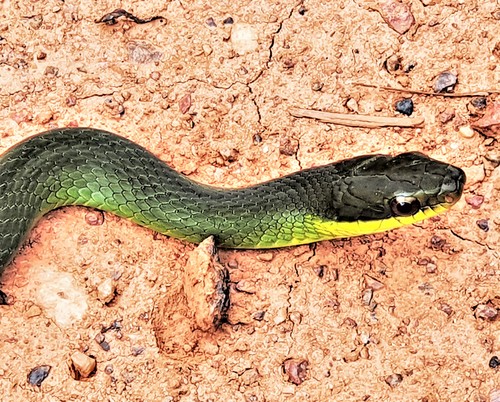
Northern Woodland Racer
Drymoluber dichrous
- Venom
- Not venomous
- To people
- Harmless
- Constrictor
- Not documented
- Type
- Colubrid
- Family
- Colubridae
- Genus
- Drymoluber
- Continents
- South America
- Countries
- 9
- How common
- Common
About
Northern Woodland Racer (Drymoluber dichrous) is a non-venomous colubrid of the family Colubridae, found in Bolivia, Brazil, Colombia, Ecuador, French Guiana and 4 more. It lives in habitats such as tropical rainforest, tropical moist forest, tropical lowland forest, tropical montane forest and 31 more. Common: recorded in 173 places on iNaturalist.
Where it lives
States, provinces and islands
- Bolivia: Beni 47 species, La Paz 33 species, Pando 14 species
- Brazil: Alagoas 31 species, Bahia 126 species, Ceará 58 species, Espírito Santo 59 species, Minas Gerais 103 species, Pará 121 species, Paraíba 46 species, Rio de Janeiro 82 species, Roraima 69 species
- Colombia: Amazonas 51 species, Boyacá 36 species, Cundinamarca 36 species, Guaviare 17 species, Meta 44 species
- Ecuador: Morona-Santiago 48 species, Orellana 44 species, Pastaza 48 species, Sucumbíos 37 species, Tungurahua 54 species
- Guyana: Pomeroon-Supenaam 7 species, Upper Demerara-Berbice 20 species
- Peru: Cusco Departament 22 species, Loreto 59 species, Madre de Dios 56 species, Pasco 10 species, San Martín 35 species, Ucayali 9 species
- Suriname: Sipaliwini 25 species
Cities in its range
Big cities inside the states and provinces where it is recorded - not individual sightings.
- Ananindeua Brazil
- Belford Roxo Brazil
- Belo Horizonte Brazil
- Belém Brazil
- Betim Brazil
- Boa Vista Brazil
- Campina Grande Brazil
- Campos dos Goytacazes Brazil
- Caucaia Brazil
- Contagem Brazil
- Duque de Caxias Brazil
- Feira de Santana Brazil
- Fortaleza Brazil
- Governador Valadares Brazil
- Ipatinga Brazil
- Itabuna Brazil
- João Pessoa Brazil
- Juazeiro do Norte Brazil
- Juiz de Fora Brazil
- Maceió Brazil
- Montes Claros Brazil
- Niterói Brazil
- Nova Iguaçu Brazil
- Petrópolis Brazil
- Ribeirão das Neves Brazil
- Rio de Janeiro Brazil
- Salvador Brazil
- Santa Luzia Brazil
- Serra Brazil
- Sete Lagoas Brazil
- Soacha Colombia
- São João de Meriti Brazil
- Uberaba Brazil
- Uberlândia Brazil
- Vila Velha Brazil
- Villavicencio Colombia
- Vitória Brazil
- Vitória da Conquista Brazil
- Volta Redonda Brazil
Habitats
Estimated from where this snake is recorded and what kind of snake it is - not a confirmed habitat survey.
- Tropical Rainforest
- Tropical Moist Forest
- Tropical Lowland Forest
- Tropical Montane Forest
- Montane Rainforest
- Cloud Forest
- Tropical Dry Forest
- Tropical Seasonal Forest
- Evergreen Forest
- Coastal Forest
- Open Woodland
- Scrub Forest
- Thorn Forest
- Mountain Forest
- Savanna
- Tropical Savanna
- Wet Savanna
- Grassland
- Tropical Grassland
- Shrubland
- Scrubland
- Mountain Slopes
- Highlands
- Coastal Scrub
- Amazon Rainforest
- Amazon Lowland Rainforest
- Amazon Terra Firme Forest
- Atlantic Rainforest
- Guiana Shield Rainforest
- Andean Cloud Forest
- Andean Yungas
- Cerrado Savanna
- Caatinga Dry Forest
- Llanos Grassland
- Coastal Restinga
Related snakes
- Brazilian Woodland Racer Drymoluber brazili
- Apurímac Woodland Racer Drymoluber apurimacensis
- Zhao's Mountain Stream Snake Opisthotropis zhaoermii
- Atractus dapsilis
- de Silva’s Rough-Side Snake Aspidura desilvai
- Hognose Lineate Blackhead Apostolepis lineata
- Tantilla stenigrammi
- Semau Island groundsnake Stegonotus lividus
- Thomas' Racer Pseudalsophis thomasi
- Erythrolamprus rochai
- Tantilla gottei
- Cunene Racer Mopanveldophis zebrinus
Stay safe: a photo or a web page can never tell you for certain that a snake is harmless. Keep your distance, never handle a wild snake, and get medical help straight away after any bite.