 SnakeList
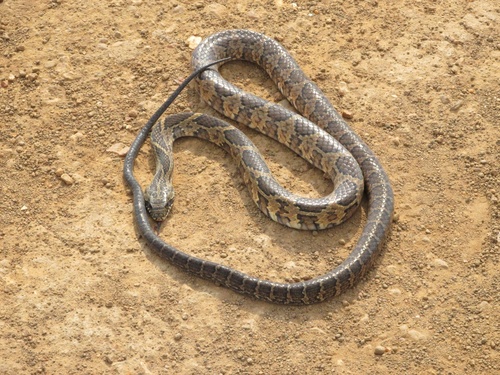
Rio Tropical Racer
Palusophis bifossatus
- Venom
- Not venomous
- To people
- Harmless
- Constrictor
- Not documented
- Type
- Colubrid
- Family
- Colubridae
- Genus
- Palusophis
- Continents
- South America
- Countries
- 7
- iNaturalist records
- Often recorded
About
Rio Tropical Racer (Palusophis bifossatus) is a non-venomous colubrid of the family Colubridae, found in Argentina, Bolivia, Brazil, Colombia, Paraguay and 2 more. Common: recorded in 93 places on iNaturalist.
Where it lives
States, provinces and islands
Where this snake is recorded. The number after each place is how many snake species SnakeList records there in all - not how many records there are of this snake.
- Argentina: Chaco (19 species in all), Corrientes (27 species in all), Formosa (21 species in all), Santa Fe (30 species in all)
- Bolivia: Beni (47 species in all), Santa Cruz (54 species in all)
- Brazil: Amapá (39 species in all), Bahia (126 species in all), Espírito Santo (59 species in all), Goiás (81 species in all), Piauí (54 species in all), Rio Grande do Sul (91 species in all), Roraima (69 species in all)
- Colombia: Casanare (28 species in all), Cundinamarca (36 species in all), Meta (44 species in all)
- Paraguay: Presidente Hayes (13 species in all), San Pedro (3 species in all)
Cities in its range
Big cities inside the states and provinces where it is recorded - not individual sightings.
- Anápolis Brazil
- Aparecida de Goiânia Brazil
- Boa Vista Brazil
- Canoas Brazil
- Caxias do Sul Brazil
- Feira de Santana Brazil
- Goiânia Brazil
- Gravataí Brazil
- Itabuna Brazil
- Macapá Brazil
- Novo Hamburgo Brazil
- Pelotas Brazil
- Porto Alegre Brazil
- Rio Verde Brazil
- Salvador Brazil
- Santa Maria Brazil
- Serra Brazil
- Soacha Colombia
- São Leopoldo Brazil
- Teresina Brazil
- Viamão Brazil
- Vila Velha Brazil
- Villavicencio Colombia
- Vitória Brazil
- Vitória da Conquista Brazil
Habitats estimated
Habitat types found in the countries, states and provinces where it is recorded, narrowed by what kind of snake it is. They have not been checked for this species, so some may not apply.
- Rainforests
- Forests & woodlands
- Savannas & grasslands
- Shrublands & heath
- Deserts & dunes
- Mountains & rocks
- Wetlands & swamps
- Coasts & sea
The 45 habitat types in the estimate
- Tropical Rainforest
- Tropical Moist Forest
- Tropical Lowland Forest
- Tropical Montane Forest
- Montane Rainforest
- Cloud Forest
- Tropical Dry Forest
- Tropical Seasonal Forest
- Subtropical Forest
- Subtropical Dry Forest
- Evergreen Forest
- Broadleaf Forest
- Coastal Forest
- Woodland
- Dry Woodland
- Open Woodland
- Scrub Forest
- Thorn Forest
- Mountain Forest
- Savanna
- Tropical Savanna
- Wet Savanna
- Grassland
- Tropical Grassland
- Temperate Grassland
- Shrubland
- Scrubland
- Semi-Desert
- Mountain Slopes
- Highlands
- Coastal Scrub
- Amazon Rainforest
- Amazon Lowland Rainforest
- Amazon Terra Firme Forest
- Atlantic Rainforest
- Guiana Shield Rainforest
- Andean Cloud Forest
- Andean Yungas
- Cerrado Savanna
- Pantanal Wetlands
- Caatinga Dry Forest
- Gran Chaco Woodland
- Llanos Grassland
- Pampas Grassland
- Coastal Restinga
Related snakes
Same family: Colubridae other genera
- Boomslang Dispholidus typus
- California Kingsnake Lampropeltis californiae
- Common Gartersnake Thamnophis sirtalis
- Corn Snake Pantherophis guttatus
- Diamondback Water Snake Nerodia rhombifer
- Grass Snake Natrix natrix
- Milk Snake Lampropeltis triangulum
- Smooth Green Snake Opheodrys vernalis
Stay safe: a photo or a web page can never tell you for certain that a snake is harmless. Keep your distance, never handle a wild snake, and get medical help straight away after any bite.