 SnakeList
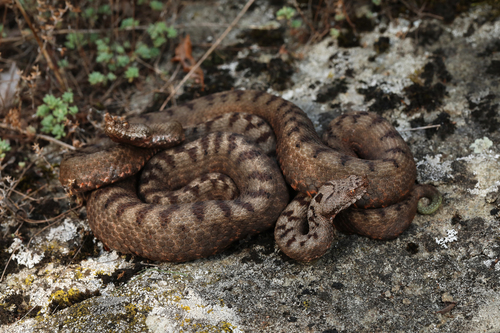
Transcaucasian Long-nosed Viper
Vipera transcaucasiana
Transcaucasian Long-nosed Viper (Vipera transcaucasiana) is a venomous viper of the family Viperidae, found in China, Georgia and Turkey.
Key facts
- Venom
- Venomous – dangerous to people
- Adult length
- Not known
- Diet
- Not known
- Reproduction
- Not known
- Size
- Medium-sized (a typical adult of its genus is about 60 cm)
- Distribution
- 3 countries · Asia
In SnakeList’s checklist filters
- Type
- Viper
- Family
- Viperidae
- Continent
- Asia
- Venomous
- Yes
- Dangerous to people
- Yes (Harmful)
- Constrictor
- No
- Snake eater
- No
- Popular
- No (Uncommon)
- Exotic
- Yes (not native to North America)
- Invasive
- No
- Common or rare
- Rare (no confirmed records on iNaturalist)
- Photos
- Yes
- Extinct
- No
- Habitats
- Forests & woodlands, Savannas & grasslands, Shrublands & heath, Mountains & rocks (estimated, as in the app)
“Mark seen” and “Want to see” open this snake in the SnakeList app, where your lists are kept on your device – tap the highlighted button on its card. “View on map” opens the app’s map on it.
Distribution
Map
Shaded countries are those where it is recorded – it does not live everywhere inside them.
States, provinces and islands where it is recorded
More detail than the countries, but still approximate. The number after each place is how many snake species SnakeList records there in all, not how many records there are of this snake.
Countries where it is recorded (3 countries)
Behaviour and ecology
Habitat types in its range rough estimate
Habitat types found in the countries, states and provinces where it is recorded, narrowed by what kind of snake it is. They have not been checked for this species, so some may not apply.
The 5 habitat types in the estimate
Taxonomy
Who described it
Author details not available.
Where the name comes from
Vipera: probably from the Latin vivus (alive) and pario (to give birth) - because most vipers bear live young[1]
transcaucasiana: ‘of Transcaucasia’ – named after where it lives
Transcaucasian Long-nosed Viper: ‘Long-nosed’ – for its long nose; ‘Viper’ – from the Latin vipera, ‘bearing live young’ - most vipers give birth instead of laying eggs.
Worked out from the Latin and Greek roots and the words in the name; parts SnakeList can’t explain are left out.
SnakeList doesn’t list its older scientific names. The Reptile Database keeps a list of its older scientific names, with who used them and when.
Sources
References (1)
- Meaning of the name Vipera. Wikipedia.
Photo: © Vojtěch Víta, used under CC BY-NC; cropped and resized by SnakeList. All photo credits.
Look it up
The Reptile DatabaseiNaturalistGBIF
How this page is made
- Countries, states and provinces, venom and family come from SnakeList’s checklist; the map shades whole countries and regions, not exact range.
- Who described it: SnakeList has no checked record yet, so a name from Wikidata is shown only if it passes basic checks.
Page generated 17 November 2026
Stay safe: a photo or a web page can never tell you for certain that a snake is harmless. Keep your distance, never handle a wild snake, and get medical help straight away after any bite.